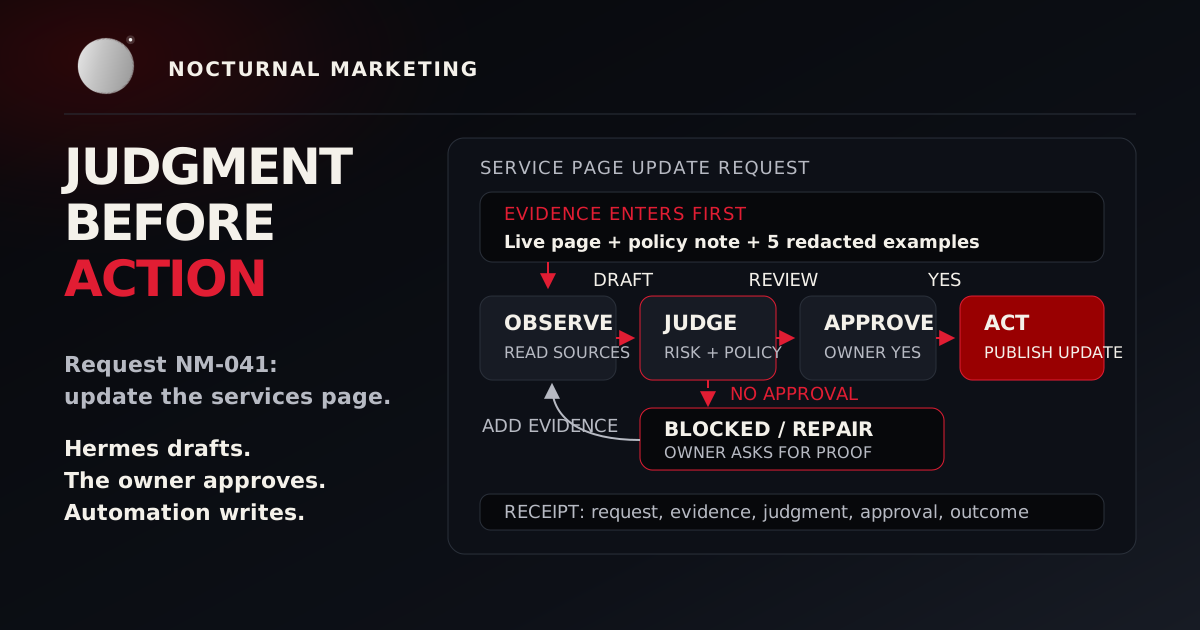
Hermes Agent for small business works best as a judgment layer. It reads messy inputs, reasons over context, prepares a recommendation or draft, and hands final approval or record changes to a human or deterministic system.
That boundary gives the agent room to think while the business keeps control of money, customer records, credentials, and public promises.
Last reviewed: July 18, 2026. Hermes product capabilities, provider support, and release details can change.
What Hermes Agent does today
Nous Research describes Hermes Agent as a self-improving AI agent with a built-in learning loop. The official docs point to persistent memory across sessions, procedural skills the agent can reuse, MCP integration, more than 60 built-in tools, scheduled automations, and a messaging gateway for platforms such as Telegram, Discord, Slack, WhatsApp, and Teams.
The provider docs say Hermes needs at least one LLM provider and can work with cloud providers such as OpenRouter and Anthropic, plus self-hosted endpoints such as Ollama and vLLM. That flexibility matters for small businesses because the agent can be configured around budget, privacy, latency, and model preference rather than locked to one vendor window.
The small-business takeaway is simple: Hermes is strongest when it has context, tools, and a scoreable task. A blank prompt window wastes the product. A bounded workflow lets it act like an operator's research and judgment layer.
Why the judgment layer is the safe starting point
An agent that summarizes ten vendor emails can save an owner an hour. An agent that changes a price in the CRM without a policy can create a customer problem before anyone sees the draft.
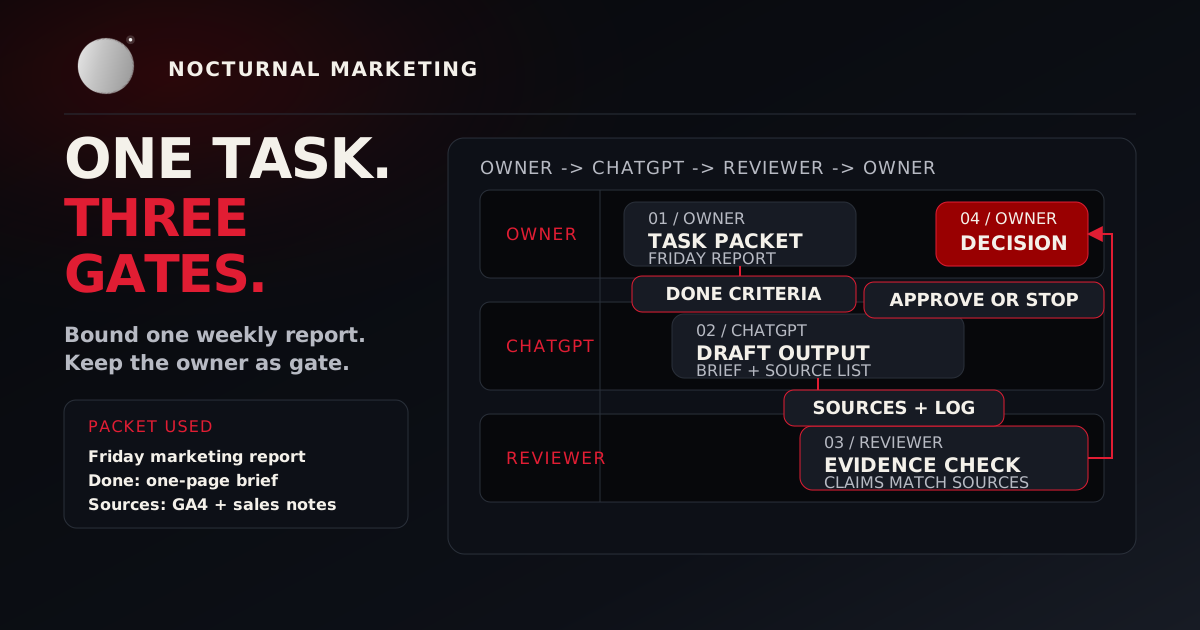
Use Hermes for interpretation. Use fixed software for exact lookups, policy enforcement, and durable writes. Put a reviewer between the two until the workflow has boring logs.
That separation also makes failures easier to repair. If Hermes drafts the wrong answer, the reviewer corrects the draft and the correction becomes training material for the workflow. If an unbounded agent writes the wrong value into production, the team now has cleanup, customer risk, and unclear evidence.
Decision table for what Hermes should own
| Workflow step | Best owner | Control to add |
|---|---|---|
| Read a long email and identify intent | Hermes | Approved source list and required fields |
| Compare vendor documents or policies | Hermes | Source notes and unresolved conflicts |
| Look up an existing customer record | API or database query | Exact match rules and access limits |
| Draft a personalized response | Hermes | Human review before sending |
| Approve a refund or change a price | Human with policy controls | Written threshold and named owner |
| Write the approved outcome to the CRM | Deterministic automation | Idempotent write and audit receipt |
| Record success, failure, and reviewer edits | Event log or observability system | Replayable input, decision, owner, and timestamp |
The table is the whole strategy. Give Hermes the work that benefits from context. Give systems of record the work that must be exact.
Five first Hermes workflows for small teams
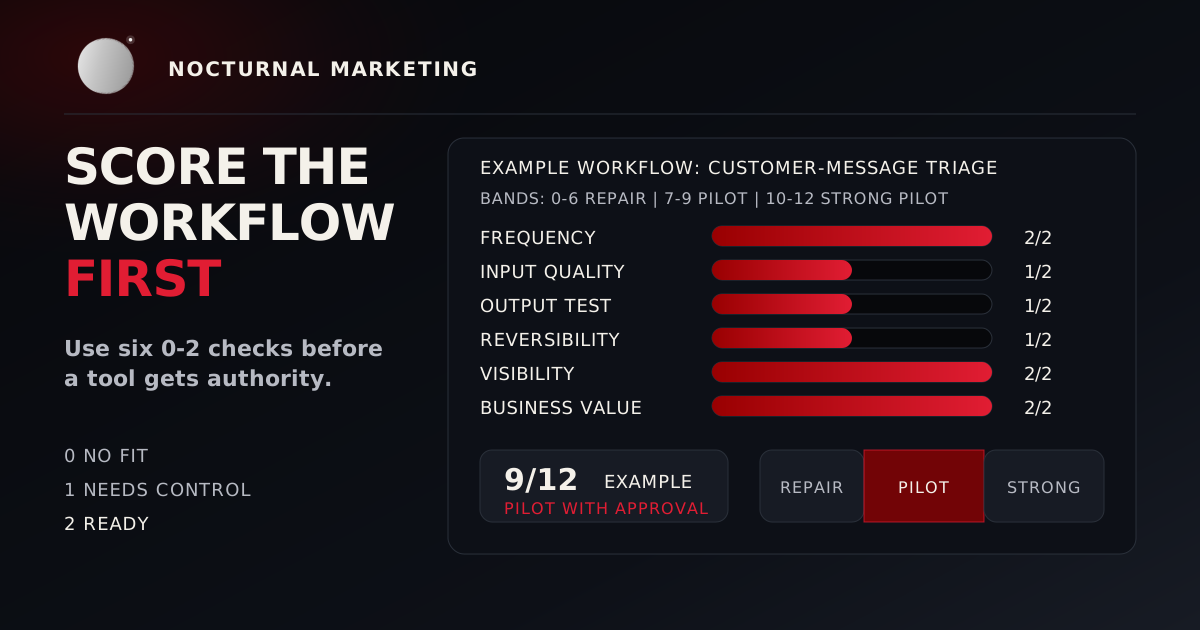
If you are still choosing the first automation candidate, use our broader small-business AI automation fit score. This Hermes article narrows the question to one tool pattern: where should an agent reason, draft, classify, or brief before a controlled handoff.
1. Research briefing
Give Hermes a defined question, an approved source list, and a required output format. Ask it to return the answer in plain language, the sources it relied on, unresolved conflicts, a confidence note, and the next decision a person needs to make.
This works for vendor comparisons, competitor notes, local regulation checks, grant research, and account preparation. It fails when the source boundary is vague.
2. Support triage
Let Hermes classify a request, extract the affected product or account, identify missing information, and draft a response. Keep ticket closure, refunds, service credits, and public commitments behind approval during the first pilot.
The trust builder is reviewer speed. If a team member can approve or correct the draft in under two minutes, the workflow is earning its place.
3. Content repurposing with claim preservation
Start from an approved article, webinar transcript, client note, or service page. Have Hermes produce a LinkedIn post, email intro, FAQ draft, or short briefing while preserving the original claims and source links.
This is useful for lean teams that need more distribution from the same proof. If the business wants broader AI search visibility, pair this with the source-led method in how to write content AI search can cite.
4. Daily exception report
Feed Hermes failed automations, unanswered inquiries, duplicate leads, unusual orders, or messages outside normal rules. Ask it to group the exceptions, name the likely owner, and suggest a priority order.
Keep the repair action behind a person. The agent prepares the operating picture. The owner chooses the action.
5. Owner prep before a customer conversation
Use Hermes to summarize the account history, last messages, open tasks, known objections, and useful next questions before a sales or service call. The value is focus: the owner starts the conversation with context instead of hunting through tabs.
For a separate angle on OpenAI's move toward longer tasks across connected apps and files, read our ChatGPT Work small-business playbook.
A 60-minute pilot for Hermes Agent
A useful pilot is small enough to fail safely and concrete enough to score.
Run the judgment-layer pilot
Choose one repeated task
Collect five real examples
Define the output fields
Set the tool boundary
Run without external writes
Score the result
Keep or kill the workflow
A simple scorecard can use four yes-or-no checks:
- Did Hermes use only allowed sources?
- Did it preserve every important fact?
- Did it identify uncertainty before proposing action?
- Would a reviewer approve the result in under two minutes?
That small commitment replaces enthusiasm with evidence.
Security gates before Hermes touches production
The Hermes security documentation lists eight layers: user authorization, dangerous command approval, file write safety, container isolation, MCP credential filtering, context file scanning, cross-session isolation, and input sanitization.
Those controls are useful. Your workflow still needs its own risk boundary because a feature list cannot decide what your business is willing to expose.
Before production, require:
- least-privilege tool access;
- separate test credentials;
- redacted customer data during design;
- approval before messages, purchases, refunds, or record changes;
- logs that show input, proposed action, approval, and outcome; and
- a rollback path for every external write.
If the workflow cannot explain what happened after a failure, it is still a demo.
What to skip as a first project
Avoid payroll, autonomous refunds, account deletion, unrestricted shell access, regulated advice, pricing changes, and anything that can publish to every customer at once.
Also avoid workflows with no owner. An agent cannot repair an unclear process. It will carry that ambiguity into more places and make the cleanup harder.
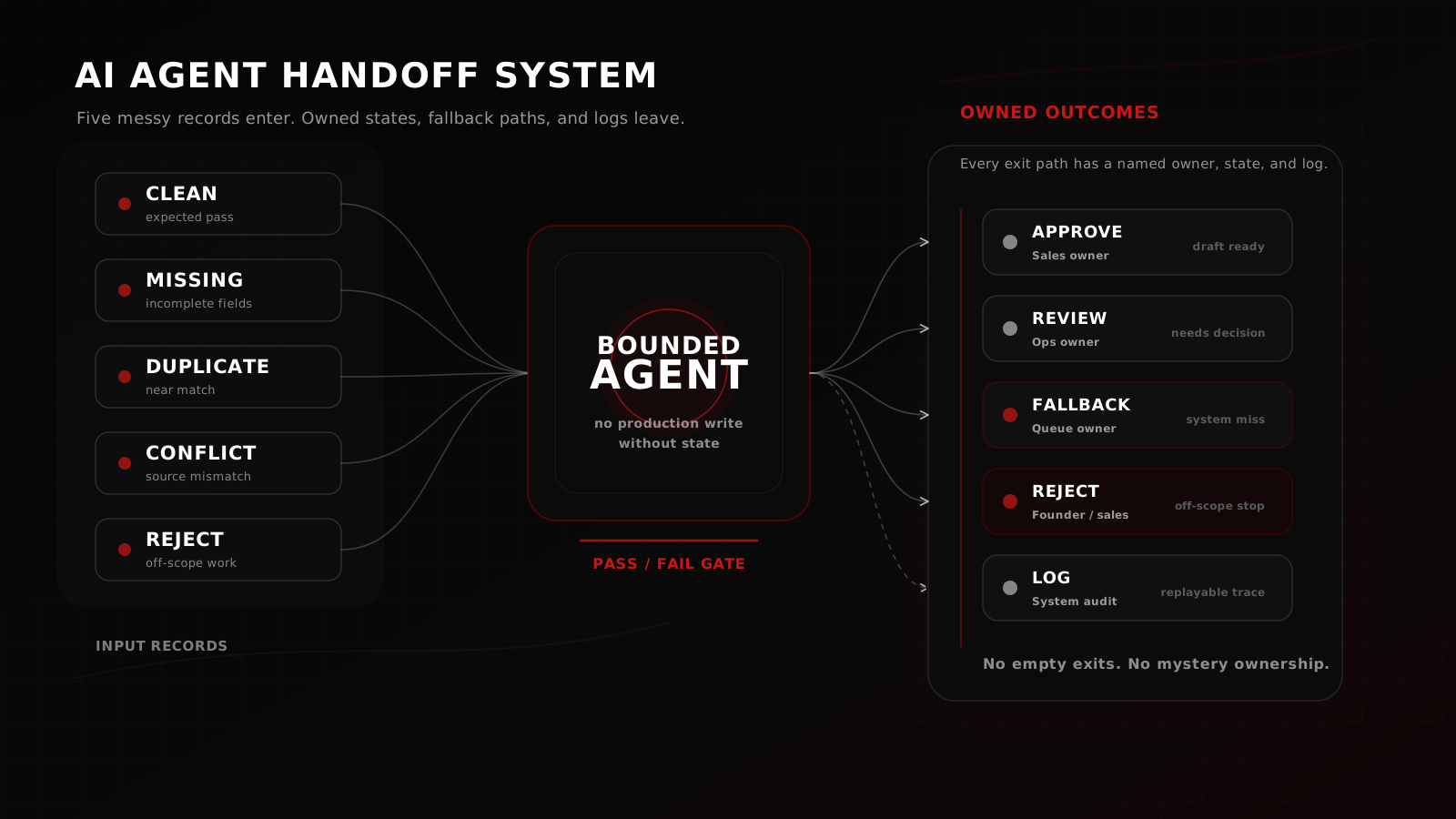
A better starting point is a bounded handoff. Our AI agent handoff test gives you a ten-minute pass/fail check for the owner, fallback, log, and reject path.
When Hermes beats a normal automation tool
Zapier, n8n, and custom APIs are better when every input, action, and output is known. Hermes earns its place when the task contains incomplete context, conflicting evidence, natural language, or a reviewer who needs a prepared recommendation.
Use both patterns together. Let Hermes interpret the messy part. Let deterministic automation move the approved result. Let a person approve consequential actions until the workflow has enough evidence to earn more autonomy. Our AI automation service builds that split one workflow at a time, with review rules, test cases, readable logs, and an owner handoff.
If the agent will affect website content, lead capture, or customer journeys, choose a partner that can design the full operating loop. Our guide to AI-native website partners explains what to ask before hiring help.
Sources and verification notes
Product claims in this article were checked against primary sources on July 18, 2026:
- Hermes Agent official docs for the built-in learning loop, memory, skills, tools, scheduled automations, and messaging gateway.
- Hermes Agent skills documentation for procedural skills and reuse across future sessions.
- Hermes Agent memory documentation for persistent memory behavior and security scanning.
- Hermes Agent provider documentation for provider setup, OpenRouter, Anthropic, Ollama, vLLM, and the requirement to configure at least one provider.
- Hermes Agent security documentation for user authorization, command approval, file write safety, container isolation, MCP credential filtering, context file scanning, cross-session isolation, and input sanitization.
- Hermes Agent v0.18.2 release for the July 7, 2026 WhatsApp Baileys dependency fix needed for tagged-release Docker builds.
Community discussions and videos helped identify buyer questions, but all product claims above are anchored to official documentation or the official GitHub release.
Hermes Agent for small business FAQ
Give the agent a safe boundary
Nocturnal Marketing builds AI workflows one at a time, with source limits, review gates, logs, and handoff tests. Bring one messy workflow, and we will show where Hermes should think, where software should write, and where a person should approve.
Map the First Agent Boundary