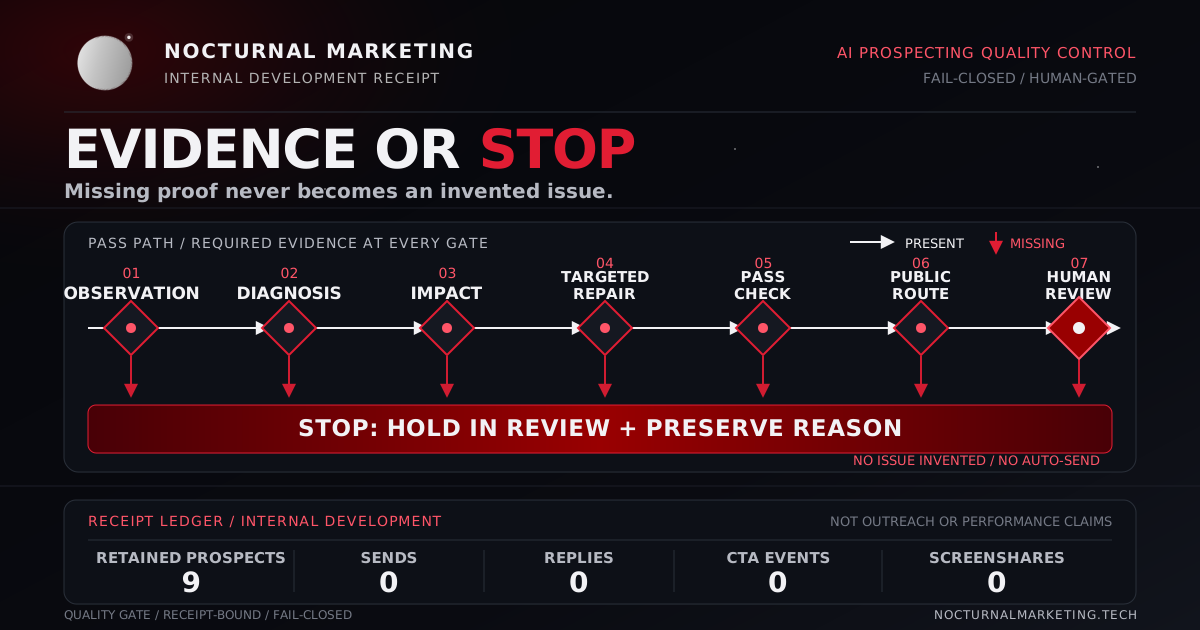
An AI-native website partner is the right choice when your site needs to connect content, customer actions, internal workflows, and AI-assisted decisions into one owned system. The partner should define source-of-truth facts, human review, deterministic controls, security boundaries, measurement, fallback behavior, and transfer before anyone celebrates a faster draft.
"We use AI" is now table stakes. The practical question is whether the provider can turn AI-assisted work into a reliable business system your team can inspect after launch.
Last reviewed: July 18, 2026. Official AI, accessibility, and search guidance changes over time.
Why this is a partner decision
AI can accelerate research, information architecture, copy drafts, design exploration, code generation, testing ideas, and documentation. Speed helps when the surrounding system is sound.
Speed hurts when the surrounding system is vague.
AI can invent a business fact, follow an outdated brand rule, generate inaccessible interactions, optimize a vanity metric, or draft an answer from the wrong source. A fast website project can still leave the business with five inconsistent versions of the same service, a form nobody owns, and a workflow nobody can recover.
That is why the choice is bigger than vendor taste or model access. You are choosing who designs the operating loop around the website.
The AI-native partner test
Use this test before a sales call, proposal review, or rebuild decision. A serious AI-native website partner should answer each item in plain language.
Use this in the vendor call
Source of truth
Decision boundary
Deterministic controls
Quality test
Human review
Failure path
Measurement
Transfer
What changes in website development
An AI-aware website project asks different questions from a conventional brochure-site build.
Content becomes governed input
Your service facts, voice rules, approved proof, terms, policies, and expert knowledge need a clean source. Otherwise every generated page can begin from a different version of the truth.
This is the same reason our guide to writing content AI search can cite starts with a claim ledger. AI systems can help draft and organize. They cannot make an unsupported claim trustworthy.
Customer actions become traceable events
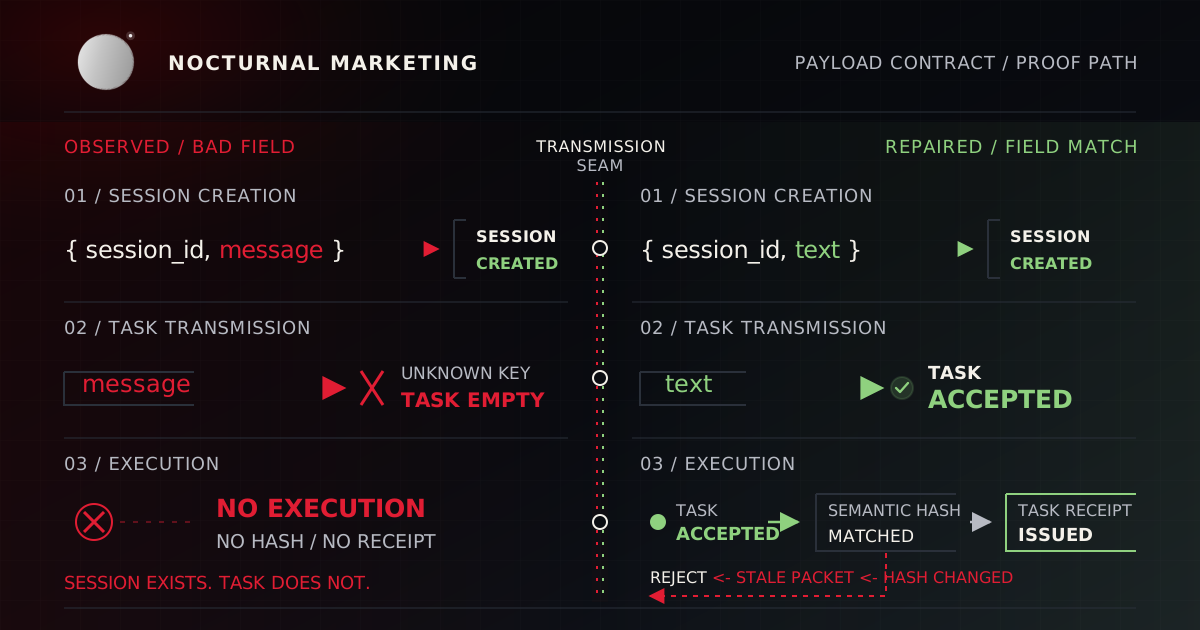
Forms, bookings, assessments, and agent interactions should create durable receipts with named owners. A success animation proves an animation ran. It does not prove the business received the action, routed it correctly, or responded.
If that failure sounds familiar, run the related lead-handoff test before changing your design system.
Review becomes part of the interface
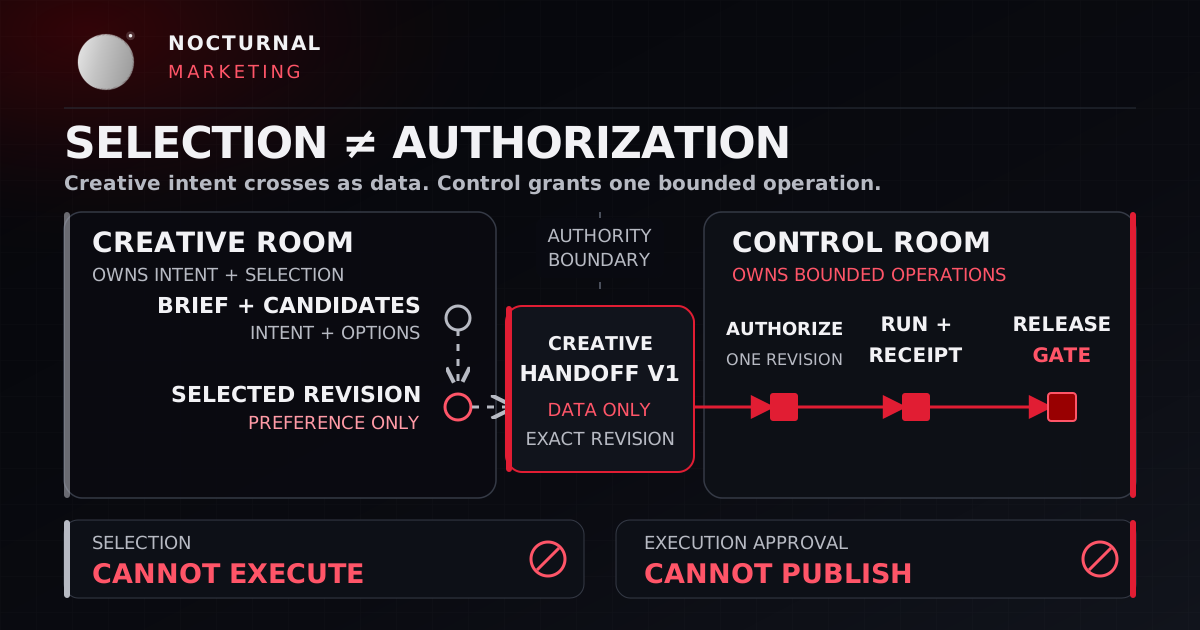
If AI drafts a response, recommendation, report, quote, or campaign, the reviewer needs context. The interface should show what changed, which evidence was used, what confidence means, which policy applies, and what action approval will trigger.
Review is a workflow design problem. Treating it as a final glance in someone else's inbox creates anxiety instead of accountability.
Failure becomes visible
Models time out. APIs change. Credentials expire. Sources conflict. Webhooks fail. Generated code can pass the happy path and still miss recovery.
A mature website partner designs the error state, alert, retry, fallback, and escalation path while designing the main experience. The failure path is part of the product.
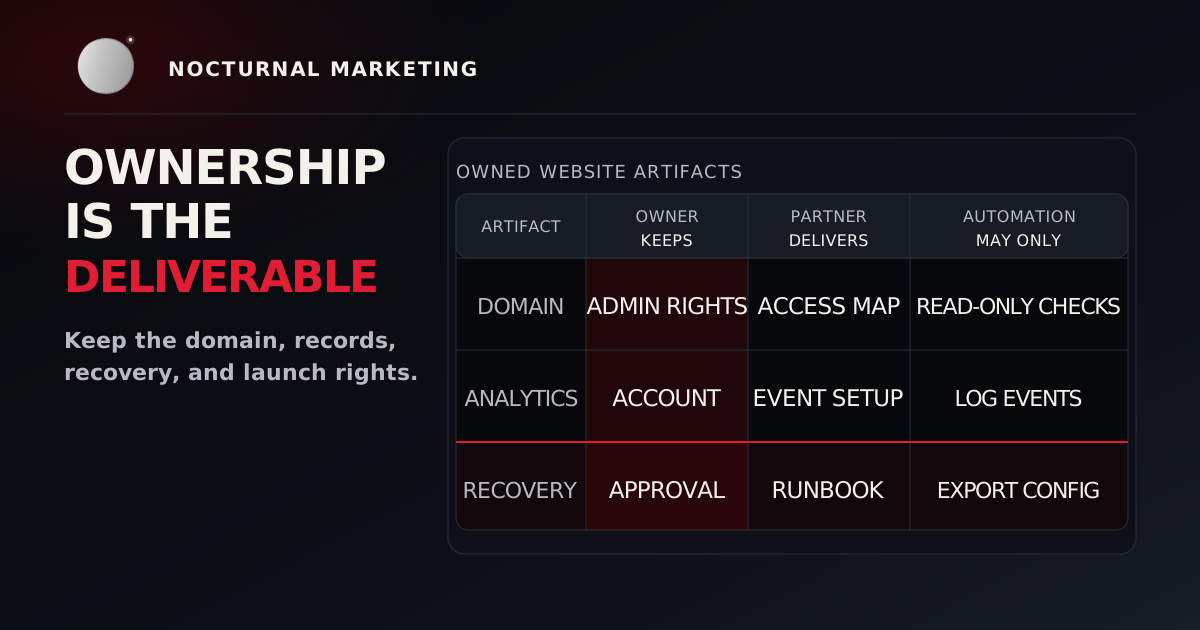
Transfer becomes a deliverable
The client needs prompts or policies, model configuration, source maps, evaluation cases, permissions, deployment steps, monitoring, known limits, and rollback instructions. Otherwise the AI feature is rented expertise disguised as a company asset.
Our AI website builder checklist covers the same gap from the buyer side: generated output needs production proof before publication.
Source notes behind the standard
The standard above is practical, and it is also aligned with primary guidance from AI, security, accessibility, and search authorities.
- NIST's AI Risk Management Framework 1.0 organizes AI risk management around Govern, Map, Measure, and Manage. It also says the actions are outcomes for ongoing risk management rather than a simple launch checklist.
- The OWASP Top 10 for Large Language Model Applications names risks such as prompt injection, sensitive information disclosure, excessive agency, and overreliance. Those risks matter when a website lets AI read data, call tools, or influence customer-facing actions.
- WCAG 2.2 organizes accessibility around perceivable, operable, understandable, and robust experiences. AI-generated interfaces still need keyboard access, labels, focus states, contrast, and real user testing.
- Google's guidance on AI features and your website emphasizes crawlable public content, semantic HTML, useful original material, and page experience. A site built around AI still has to work as a clear source for people and search systems.
Checked July 18, 2026. These sources support the evaluation standard; they do not certify any specific Nocturnal service.
Why Nocturnal combines marketing and engineering
Nocturnal Marketing was founded in 2023 by Alexander Kelly after more than fifteen years working across software engineering, data, and marketing. That combination shapes the work.
We do not treat a website as separate from the workflow it starts. We look at:
- how the right person finds the page;
- which claim earns attention;
- what evidence reduces uncertainty;
- what the visitor does next;
- where the information travels;
- how the team responds;
- what can fail; and
- how the business measures the outcome.
Marketing without the handoff can create demand the system loses. Engineering without the buyer can produce a reliable feature nobody values. The useful work sits across both.
You can read more about the founder and operating principles on our About page.
Our practical standard
Every Nocturnal project, from a new website to a workflow repair, gets a written scope and price before work starts. Starting prices are on our pricing page. The work then moves through four stages.
Diagnose
Map the current path, establish the baseline, and identify the narrowest constraint worth fixing.
Design
Define the target behavior, owners, acceptance tests, failure conditions, and transfer requirements.
Build
Implement the missing control or workflow with visible milestones and review.
Transfer
Provide a working fix, pass/fail proof, documentation, and an ownership handoff.
The deliverable is a smaller system the business can inspect and operate. Strategy has value only when it changes the path from customer intent to owned outcome.
When Nocturnal is a good fit
We are a good fit when:
- you need a new website, online store, or ongoing search, ads, and social work from one team that prices it up front;
- a website or AI workflow has a visible but poorly understood failure;
- marketing, software, and operations disagree about where the problem lives;
- a prototype needs a production path;
- a customer handoff needs instrumentation and ownership;
- brand rules need to become usable system inputs; or
- the team wants proof and transfer instead of permanent mystery.
We are probably the wrong fit when the only requirement is the lowest-cost template, unlimited speculative concepts, or unsupervised AI with no owner or review gate.
A clear fit decision saves both sides time.
Frequently asked questions
AI-native website partner FAQ
Choose the partner who can explain the failure
AI makes production faster. It also makes plausible work easier to ship before the underlying decision is sound. The right partner will show you the source, boundary, test, failure path, metric, and owner.
That is the standard behind our web design work: every site is tested against written acceptance criteria before launch. If you are deciding between a builder and custom work, start with our website builder versus custom development guide. If you already have an AI idea, website problem, or broken handoff that needs to become operable, use the next step below.
Bring us the AI workflow that needs an owner
Nocturnal will isolate the weak link, define the first acceptance test, and send back a written scope and price, or a plain answer that it isn't a fit.
Test the AI Handoff