The answer to "what should a small business automate with AI first" is a repeated task with clean inputs, a reviewable output, cheap recovery, and a visible business payoff. Meeting follow-ups, research packets, content quality checks, customer-message triage, and daily exception reports usually beat payments, pricing, refunds, legal decisions, or unsupervised customer promises.
Your first AI automation should earn trust before it earns more authority. Treat it as a proof run: one bounded workflow, written pass criteria, real examples, human approval, and a clear stop rule.
Last reviewed: July 18, 2026. AI product capabilities, model behavior, and vendor terms change quickly, so verify tool-specific claims before rollout.
Use the AI automation fit score
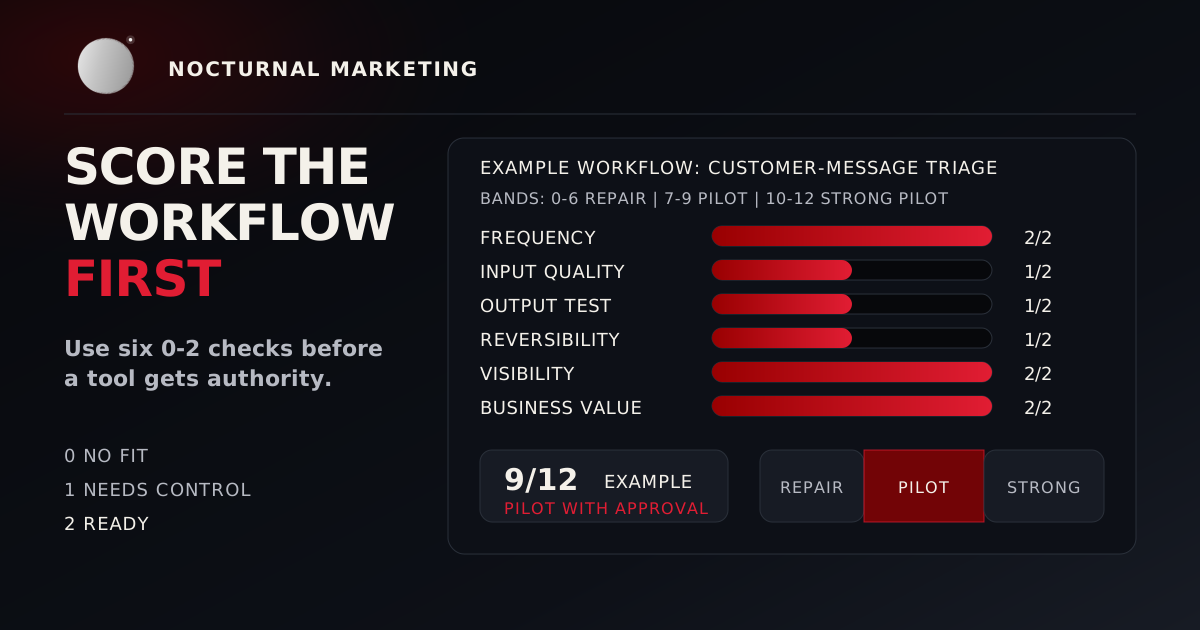
Score each candidate from 0 to 2 on six factors. A strong first AI automation scores 10 to 12. A workflow below 7 needs process repair before software.
| Factor | 0 | 1 | 2 |
|---|---|---|---|
| Frequency | Rare | Monthly | Weekly or daily |
| Input quality | Missing or inconsistent | Some cleanup needed | Available and repeatable |
| Output test | Purely subjective | Reviewer can compare | Written pass/fail criteria |
| Reversibility | Costly recovery | Recoverable with effort | Easy to reject, edit, or undo |
| Visibility | No reliable record | Partial logging | Inputs, decisions, and outcomes traceable |
| Business value | Nobody notices | One team notices | Customers, revenue, compliance, or owner time improve |
The score covers fit and value. It also forces the uncomfortable conversation most AI demos skip: who reviews the output, what evidence they need, and what happens when the system is wrong.
Example fit scores
| Candidate workflow | Typical score | First-pilot verdict |
|---|---|---|
| Meeting brief and follow-up draft | 10 to 12 | Strong first pilot when transcripts and owner lists exist |
| Research packet with source links | 9 to 12 | Strong if source rules and claim checks are written |
| Website content quality check | 9 to 11 | Strong when brand rules and approved facts are available |
| Customer-message triage | 8 to 10 | Good with human approval during the pilot |
| Daily exception report | 8 to 10 | Good when source systems already log failures |
| Autonomous refunds | 3 to 6 | Delay until policy, limits, audit trail, and rollback are proven |
| Price changes | 2 to 6 | Delay until deterministic rules and approvals exist |
| Hiring, firing, or legal decisions | 1 to 5 | Delay and require specialist policy review |
Five strong first AI automation projects
Meeting brief and follow-up draft
Input: transcript, agenda, project context, and owner list.
Output: decisions, open questions, action items, owners, deadlines, and a proposed follow-up email.
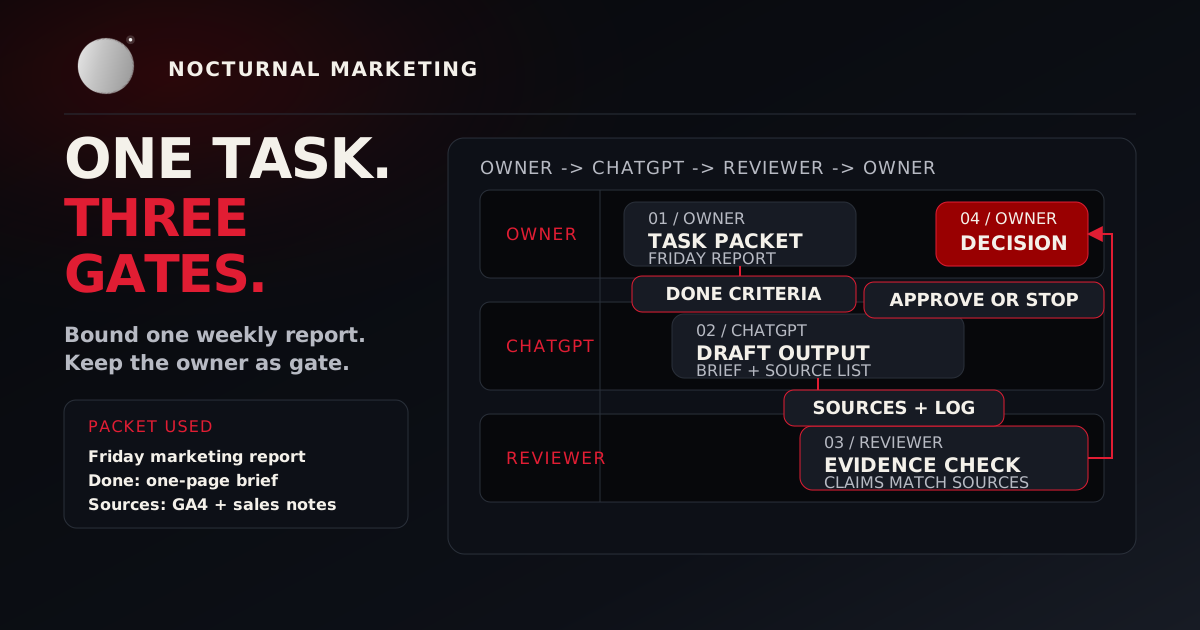
Review: the meeting owner verifies decisions before anything is sent or assigned.
Why it works: the raw material exists, omissions can be spotted, and the output is easy to edit. This is a better first step than letting AI update project records without approval.
Research packet with source links
Input: a bounded question, approved source types, blocked source types, and required fields.
Output: direct answer, supporting evidence, contradictions, unknowns, and the next decision.
Review: a domain owner checks material claims and source quality.
Why it works: AI handles synthesis while the business keeps authority over facts. OpenAI's evals documentation says evals help teams understand whether LLM applications perform against expectations, which is exactly the discipline this pilot needs.
Website content quality check
Input: page draft, brand rules, approved facts, target audience, target query, and publication checklist.
Output: vague claims, unsupported facts, missing answers, inconsistent terminology, accessibility gaps, and suggested revisions.
Review: the content owner approves edits and publication.
Why it works: review criteria can be written before the model sees the page. If this is your use case, pair this article with our guide to writing content AI search can cite.
Customer-message triage
Input: inbound message, category list, urgency rules, customer status, and approved policies.
Output: category, priority, extracted facts, proposed destination, and a response draft.
Review: a person approves routing and customer-facing language during the pilot.
Why it works: classification saves attention without giving the model permission to promise an outcome. If your current lead path is already unreliable, run the lead handoff test before adding AI.
Daily exception report
Input: failed jobs, overdue records, unanswered inquiries, inventory mismatches, or transactions outside normal rules.
Output: grouped exceptions, likely cause, impact, evidence, and recommended owner.
Review: the operations owner chooses the action.
Why it works: deterministic automation handles the happy path. AI helps people make sense of the messy remainder, then hands the decision back to the owner.
Use the automation ladder
A safe pilot moves through levels. Promotion depends on evidence from the prior level.
Four permission levels
Assist
Propose
Execute with approval
Bounded autonomy
Bounded autonomy is a permission level. Give it only after the workflow has passed real examples, edge cases, and controlled failures.
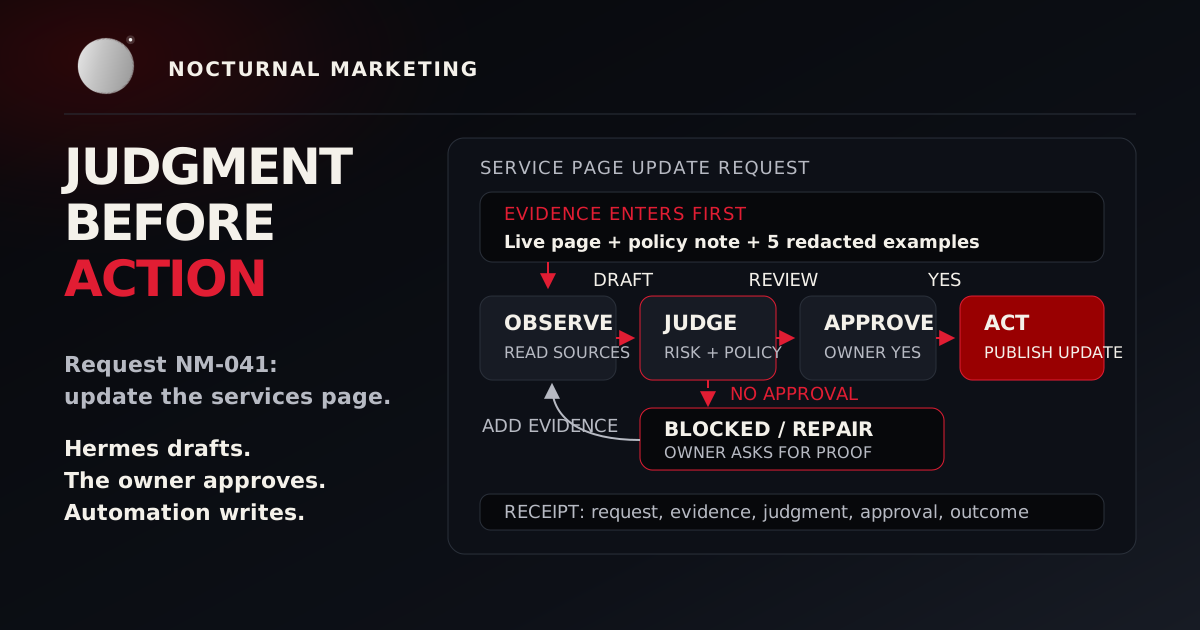
If you are evaluating an agent rather than a simple automation tool, use the same boundary. Our Hermes Agent small-business judgment layer explains which work belongs to an agent and which work should stay deterministic.
Define the pass condition first
A useful AI pilot has a contract. Write it before choosing the tool.
The contract should include:
- required inputs;
- authoritative sources;
- blocked sources;
- required output fields;
- prohibited actions;
- escalation conditions;
- reviewer and response time;
- acceptable error threshold;
- logging requirements;
- rollback path; and
- the business metric the workflow should influence.
Then test representative examples, including an incomplete input and an edge case. Keep hard examples in the test set. Removing them makes the pilot look cleaner while making the business less safe.
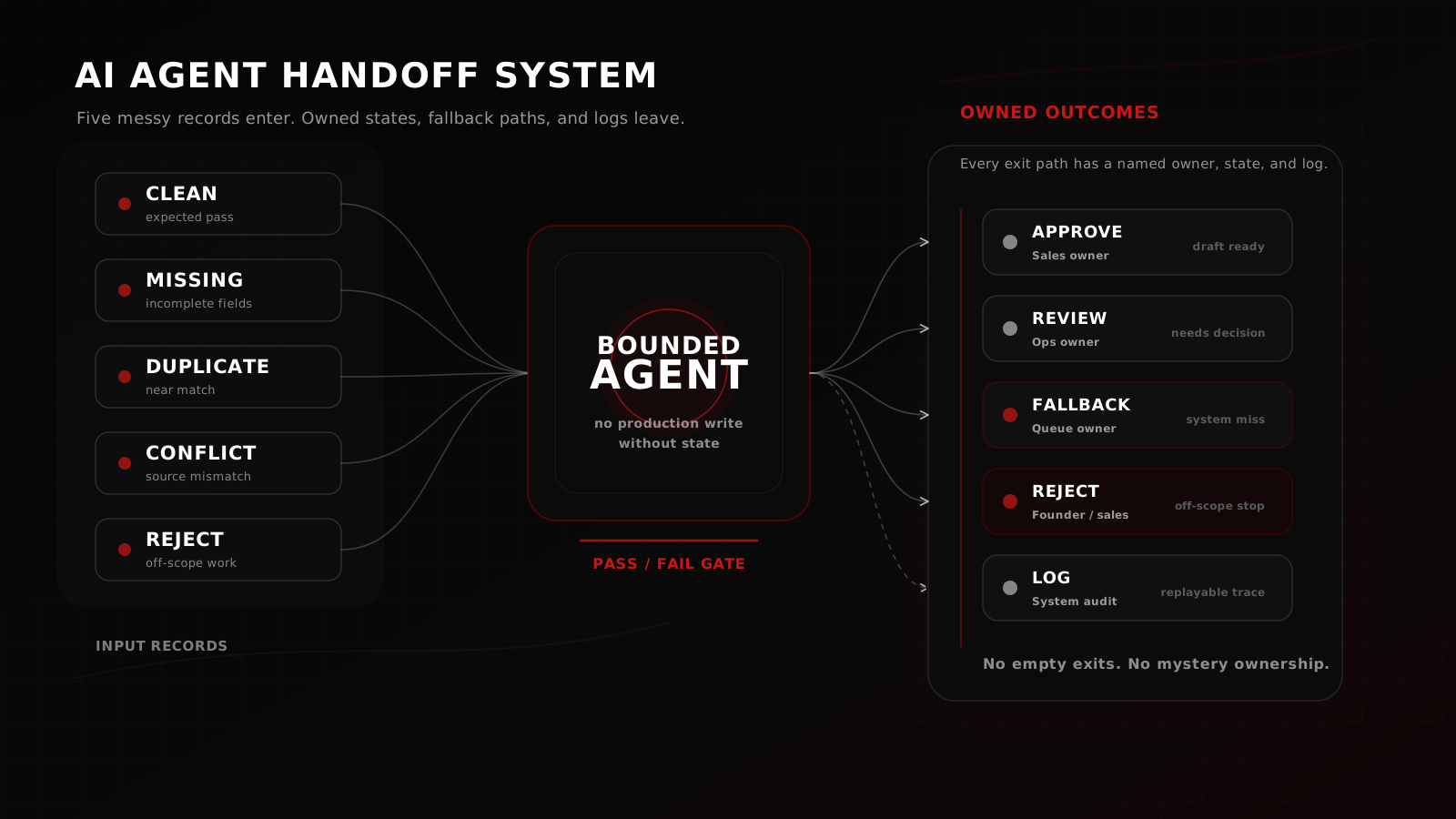
Our AI agent handoff test provides a compact pass/fail structure you can adapt.
Measure outcomes, corrections, and trust
Track the workflow as an operating system. A demo ends when the output looks impressive. An operating system has receipts.
Measure:
- time from input to approved result;
- material corrections per output;
- unsupported or fabricated claims;
- missing-source rate;
- failure and retry rate;
- reviewer time;
- downstream acceptance;
- escalation volume; and
- whether the team trusts the result enough to use it.
That last measure is operational. If the workflow saves ten minutes but makes the owner recheck every source from scratch, labor moved from one place to another.
Ask reviewers why they hesitate. The answer often identifies missing evidence, unclear ownership, or a permission that expanded too early.
Run a one-week AI automation pilot
One-week pilot
Day 1: choose one workflow
Day 2: run read-only examples
Day 3: improve the inputs
Day 4: run fresh examples
Day 5: compare against the threshold
This gives a busy team a small commitment they can judge. It also protects the business from buying an AI platform before it knows which workflow deserves automation.
For a broader vendor and workflow lens, read our ChatGPT Work small-business playbook.
Source notes
- NIST's AI Risk Management Framework organizes AI risk work around Govern, Map, Measure, and Manage. It also identifies trustworthy AI characteristics such as validity, reliability, safety, security, accountability, transparency, explainability, privacy, and fairness. Those are the reasons this article emphasizes review criteria, traceability, and human intervention before autonomy.
- NIST's trustworthiness guidance says deployed AI systems are often assessed through ongoing testing or monitoring, and some cases require human intervention when the system cannot detect or correct errors. That supports the ladder, logging, escalation, and rollback requirements above.
- OpenAI's evals guide says using evals to understand how LLM applications perform against expectations is an essential component of building reliable applications. That supports the pass-condition-first approach for small-business pilots.
Questions small businesses ask before automating with AI
If the workflow touches website, data, and operations together, see how our AI automation service scopes one workflow with review rules, test cases, and a fallback before expanding permissions.
Bring one workflow
Nocturnal Marketing maps the handoff, writes the pass condition, builds the smallest useful control, and proves it before your team expands AI permissions.
Map One Workflow